
How Age Affects Fertility in Women and Men: A Clinical Perspective
Chances of pregnancy decline with age, but up to what age is pregnancy actually possible? For women who hope to conceive, this can be a sensitive topic since there are biological limits. In this article, we explain from a medical perspective how fertility changes by age in both women and men. We also outline approaches that may help maintain fertility through lifestyle and health management.
For Women: Fertility Generally Extends Until the Early 40s to Menopause
There is considerable individual variation in female fertility—the ability to conceive. In general, the reproductive potential in women is considered to extend from the early 40s until menopause. Menopause refers to the natural cessation of ovulation and menstruation, which most women experience between the ages of 45 and 50. After menopause, natural conception is no longer possible.
However, having the possibility of pregnancy until menopause does not mean that the likelihood remains high throughout this period. As women age, both the number and quality of eggs decline. As a result, the likelihood of natural pregnancy in the 40s decreases significantly, with estimates of approximately 1–5% per cycle (*1).
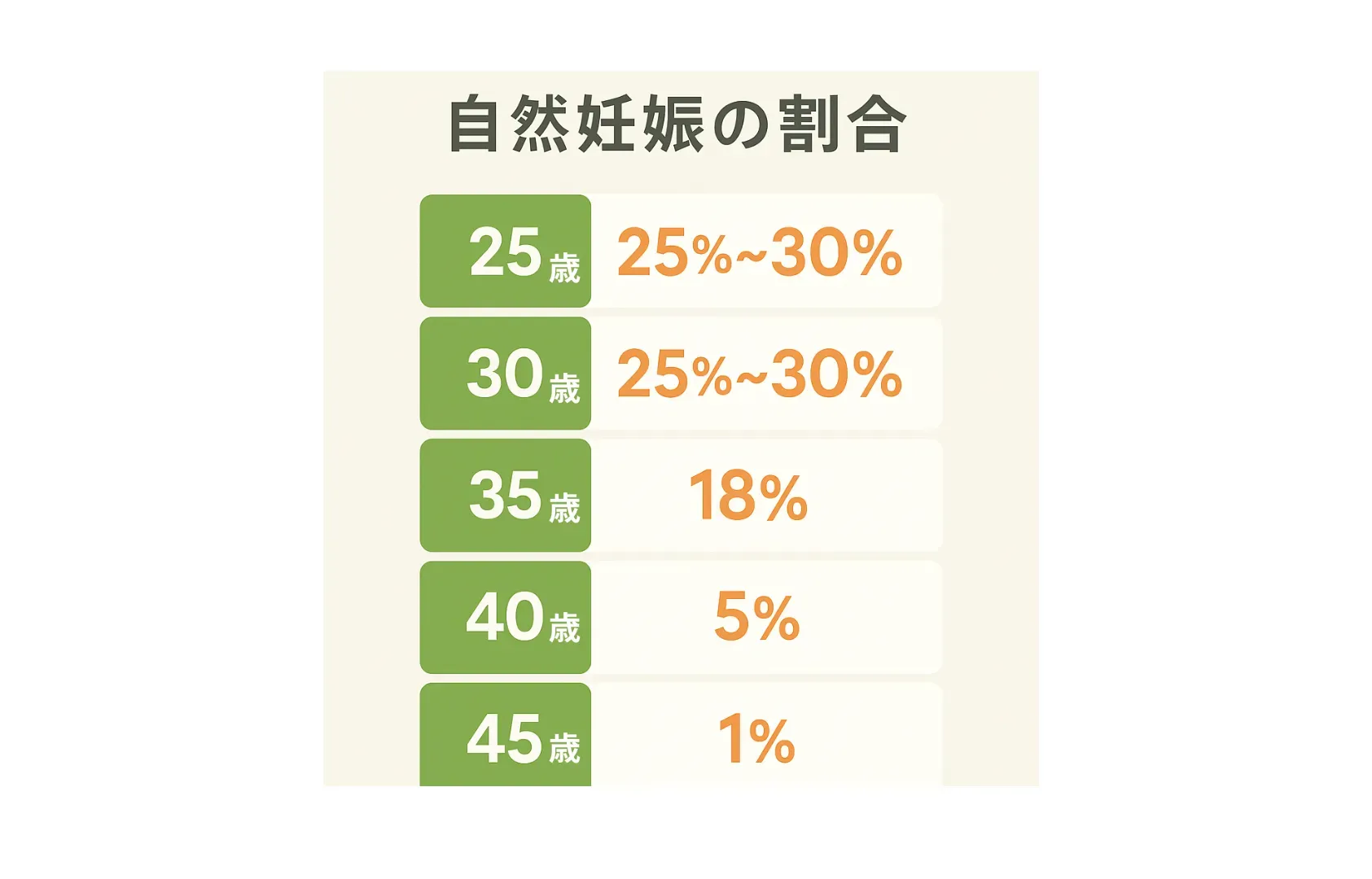
However, this reflects a reduced probability rather than impossibility.
Even when pregnancy does occur, the physical burden on the mother and the risks to the fetus increase with age. From a medical standpoint, pregnancy after age 45 requires particularly careful consideration. In Japan, some infertility treatments have been covered by insurance since 2022; however, eligibility is limited to women under 43 years of age, reflecting these medical considerations.
*1 Pregnancy rate data (per cycle)
(Source: Gynecology Lab, “The Probability of Natural Pregnancy Is Lower Than You Think”)
*2 Infertility treatment initiatives: Ministry of Health, Labour and Welfare official website
Why Female Fertility Is Limited: The Aging of Eggs
Female fertility declines mainly due to the aging of eggs. Women are born with a finite number of eggs, and over time, not only does this number decrease, but egg quality also declines.
Higher-quality eggs are more likely to fertilize and implant successfully. However, with increasing age, the risk of chromosomal abnormalities rises. This leads not only to a lower chance of pregnancy but also to a higher risk of miscarriage.
In particular, the decline in egg quality is known to accelerate from around age 35 until menopause.
One important point to note is that having regular menstrual cycles does not necessarily indicate preserved fertility. This misunderstanding may lead to delayed decision-making and regret.
How Long Can Men Contribute to Pregnancy?
In contrast, male fertility has received relatively less attention. This is largely because sperm are continuously produced throughout life.
However, recent research indicates that sperm quality also declines with age. Sperm motility tends to decrease, and the risk of DNA damage increases from the mid-30s into the 40s. These changes may affect not only fertilization but also embryo development after implantation.
In other words, male fertility is also affected by age. It is important for both partners to be aware of their reproductive health.
Preparing for Future Pregnancy
In recent years, more people are choosing to plan ahead for future pregnancy. This includes optimizing lifestyle factors to support egg and sperm quality, as well as considering options such as egg freezing.
For men, undergoing a preconception checkup or semen analysis can provide information about sperm concentration and motility. In addition, smoking, alcohol consumption, excessive stress, and lack of sleep are all known to negatively affect sperm quality.
For women, monitoring ovulation and hormone balance, and receiving guidance on appropriate treatments such as oral contraceptives or lifestyle modifications when needed can help maintain fertility.
Egg freezing is also an important option to consider early, particularly for women under 40. In some areas, financial support for egg freezing may be available through local government programs.
For those who wish to become pregnant, the concept of an “ideal age” should be seen as a guideline rather than a strict threshold. What is most important is understanding your own preferences and your body’s condition, and finding the right balance between them.
Taking early steps to preserve future options should be viewed as a proactive approach.
Whether you are planning a natural pregnancy, exploring medical treatment, or considering fertility preservation, the first step is to obtain accurate information and understand your current physical condition.
Medical support may also play a role in future planning.
If you have any concerns, please do not hesitate to reach out.
A common concern we hear is, “Is it already too late?” However, fertility cannot be determined by age alone. Factors such as partnership status and future family planning goals also play an important role.
To make decisions that are appropriate for your individual situation, assessing your current fertility status through AMH testing can be helpful.
If you are considering pregnancy now or in the future, early preparation is recommended.